
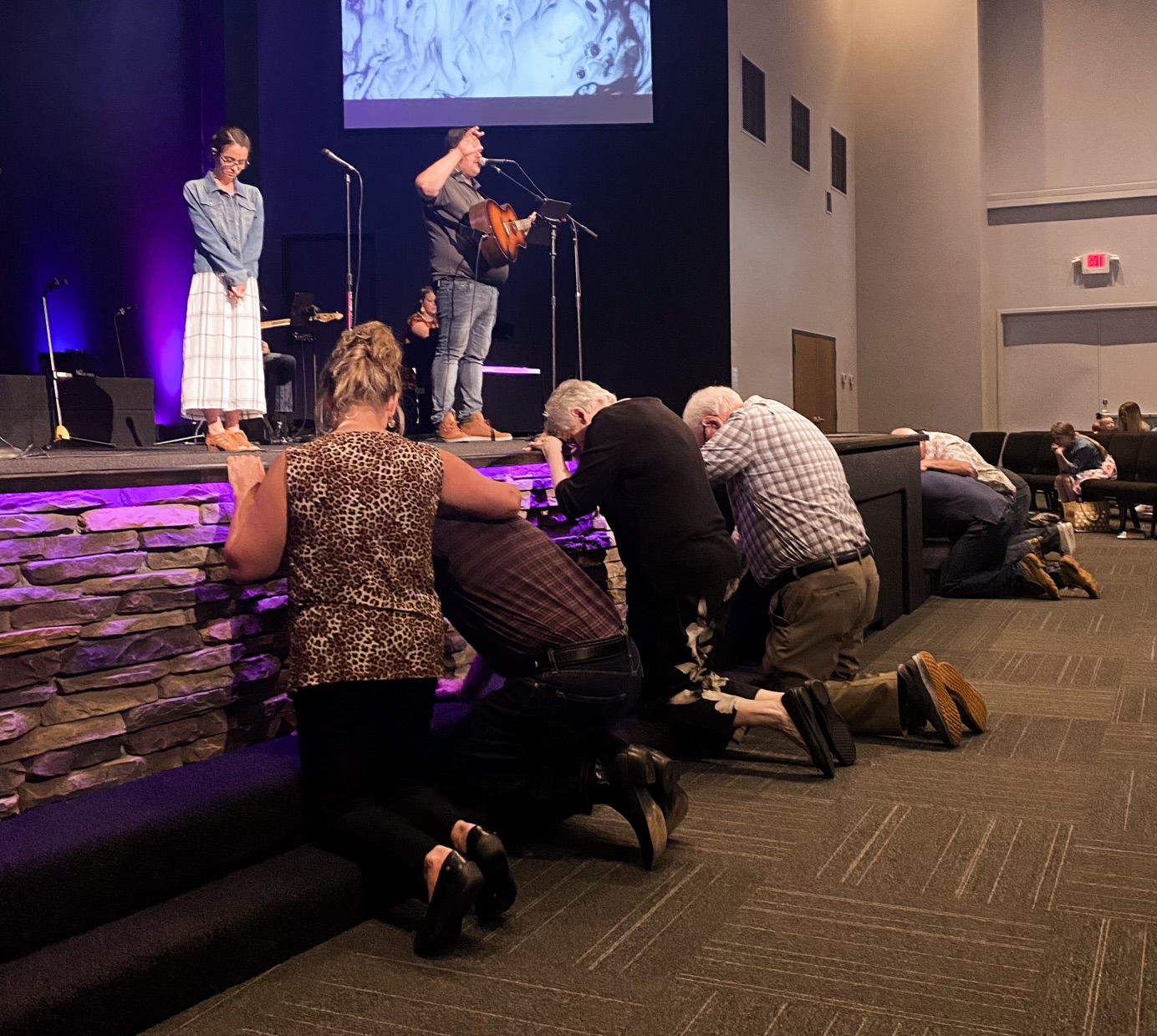
People responding in prayer during worship

JOE DICKERSON’S WORSHIP PHILOSOPHY

Scripture.
Congregation.
Gospel.

Worship is the response of God’s people to who He is and what He has done. The task of the worship leader is not to manufacture that response, but to faithfully help the church give voice to it.

THE HEART BEHIND THE MUSIC

Helping God’s people sing God’s truth together.

I believe congregational worship should be rooted in Scripture, centered on Christ, and shaped by the gospel. The songs we sing do more than fill time in a service. They put truth on the lips of the church, help the Word of Christ dwell richly among His people, and give us language to proclaim who God is and what He has done.

That conviction shapes how I choose songs, prepare teams, plan services, lead from the platform, and think about technology. Every element should serve the congregation and support the proclamation of the Word.

“Let the word of Christ dwell in you richly, teaching and admonishing one another in all wisdom, singing psalms and hymns and spiritual songs…” — Colossians 3:16
01

Worship begins with God.

Christian worship is first a response to God—His character, His Word, His saving work, and His glory. Our starting point is not musical style, personal preference, or the emotional atmosphere we hope to create. We begin by asking what is true about God and how His people should respond.

This keeps worship from becoming primarily about us. The church gathers because God has called a people to Himself, and we respond with praise, confession, thanksgiving, prayer, proclamation, and song.

02

Scripture shapes our worship.

Colossians 3:16 is foundational to how I understand congregational song. The Word of Christ is to dwell richly among the church, and singing is one of the ways the congregation teaches and admonishes one another.

Because songs teach, lyrics matter. I want the songs I lead to be biblically faithful, theologically substantial, understandable, and useful to the church. Scripture should shape not only the songs we select, but also our prayers, transitions, readings, and the overall movement of the gathering.

03

Christ and the gospel remain central.

The church has something distinct to sing: Jesus Christ has lived, died, risen, and reigns. Our worship should continually rehearse that good news. We remember who God is, acknowledge our need, celebrate what Christ has accomplished, and respond in faith and obedience.

A church should leave its gathering with more than a melody in its head. The truth of the gospel should be in its heart and on its lips.

04

The congregation is not the audience.

The platform serves the room. Congregational worship is something the church does together, not a performance the church watches. That affects keys, arrangements, song selection, volume, transitions, and even how musicians carry themselves on the platform.

I want to lead in a way that gives people confidence to participate. A successful worship set is not measured simply by how well the band performed, but by whether we faithfully helped the people of God sing together.

05

Worship leadership is pastoral leadership.

A worship leader does more than count off songs. The role requires shepherding people—both the congregation and the team. That means knowing why we sing what we sing, communicating truth clearly, caring for volunteers, developing leaders, and building a culture where character matters alongside ability.

Musicians are not merely filling positions. They are people to disciple, encourage, challenge, and equip for ministry.

06

Excellence is stewardship, not perfectionism.

Preparation matters because what we do serves other people. Rehearsal, musical skill, organization, production, and technology can remove distractions and allow the congregation to focus on worship. Excellence is therefore worth pursuing.

But excellence is not the object of our worship, and perfection is not the standard by which ministry is made meaningful. We prepare faithfully, use our gifts well, remain flexible, and remember that polished production can never substitute for spiritual substance.

07

We are forming a singing church.

What a congregation sings week after week becomes part of its memory and theological vocabulary. I value songs that a church can carry beyond a single Sunday—songs people can sing in celebration, suffering, repentance, uncertainty, and hope.

That means introducing music intentionally and allowing strong songs time to become part of the life of the church. The goal is not constant novelty. The goal is a congregation with a deep vocabulary of truth.

08

Sunday worship should shape Monday worship.

The gathered church is essential, but worship does not end when the service ends. We gather to hear the Word, sing the truth, encourage one another, and then live as people transformed by the gospel.

My hope is that the truths we sing together follow people into their homes, workplaces, relationships, suffering, service, and witness. The gathering should prepare the church for a life of worship.

THE AIM

Faithful worship.
A singing church.
Christ exalted.

That is the kind of worship ministry I want to build, develop, and bring with me when I have the privilege of serving another church or ministry.

Invite Joe to Serve